Course Summary and Key Takeaways
Connecting to LMS... Progress: in progress
Narration
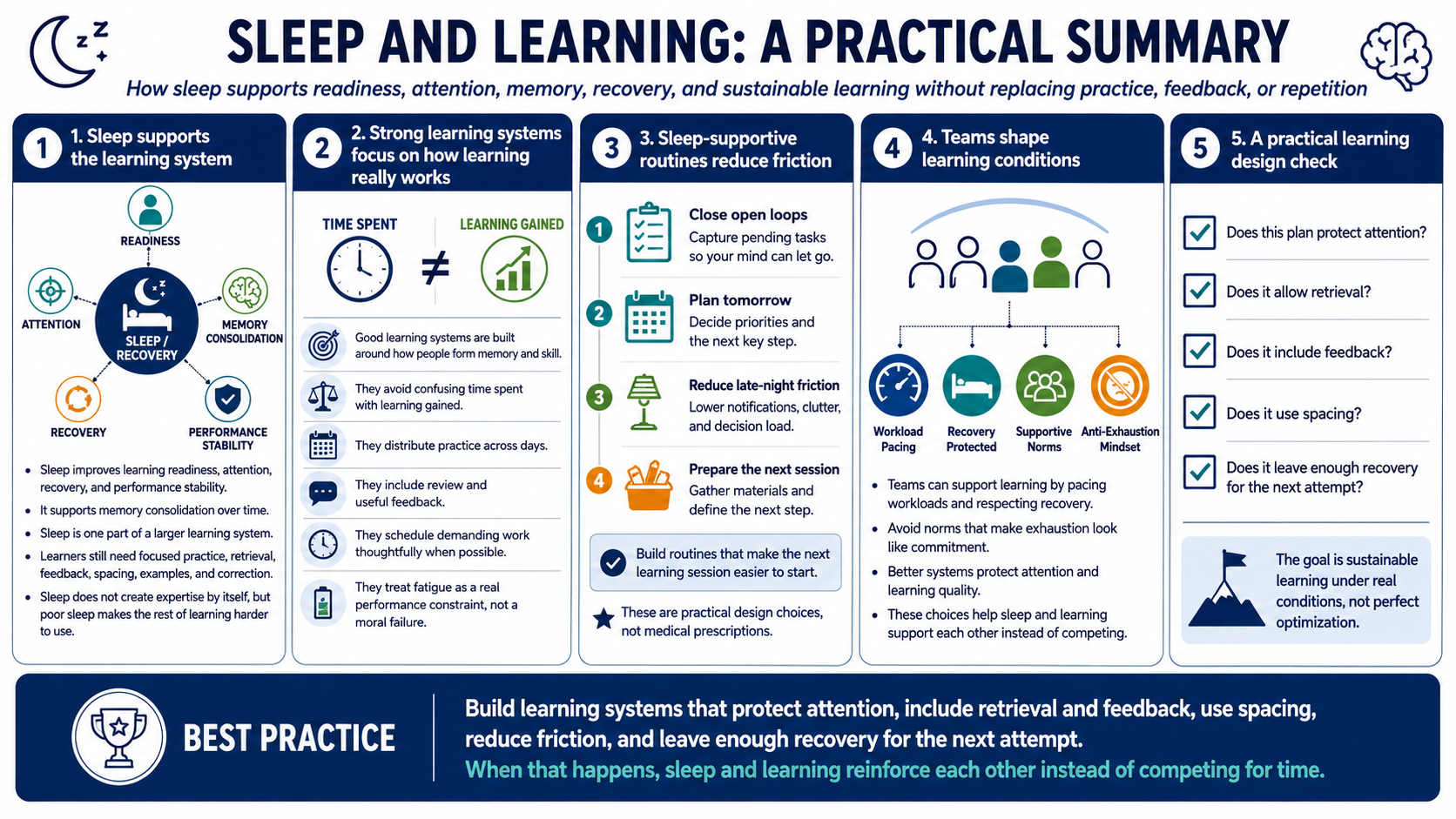
Sleep supports learning by improving readiness, attention, memory consolidation, recovery, and performance stability. It is one part of a larger learning system. Learners still need focused practice, retrieval, feedback, spacing, examples, and correction. Sleep does not create expertise on its own, but poor sleep can make the rest of the system harder to use.
Strong learning systems are built around how people actually form memory and skill. They avoid confusing time spent with learning gained. They distribute practice across days, include review, use feedback, and schedule demanding work thoughtfully when possible. They also recognize fatigue as a real performance constraint rather than a moral failure.
Sleep-supportive routines help close loops, reduce late-night friction, and prepare the next learning session. Teams can support better learning by pacing workloads, respecting recovery, and avoiding norms that make exhaustion look like commitment. These are practical design choices, not medical prescriptions.
The goal is not perfect optimization. The goal is sustainable learning under real conditions. A practical learner or training designer asks: does this plan protect attention, allow retrieval, include feedback, use spacing, and leave enough recovery for the next attempt? When the answer is yes, sleep and learning reinforce each other instead of competing for time.